

Various studies around the world have found that bacteria and viruses causing infectious diseases may remain suspended in the air for approximately 3 hours after a cough or sneeze, depending on the environment and the organism, and may survive as droplets on surfaces for 3 days.
With the arrival of coronavirus and the recognition that it spreads through the air, the quality of the air we breathe has become much more important. As a result, fundamental changes to air conditioning and ventilation systems in homes, workplaces, shopping centres, hotels, hospitals and large spaces have become critical.
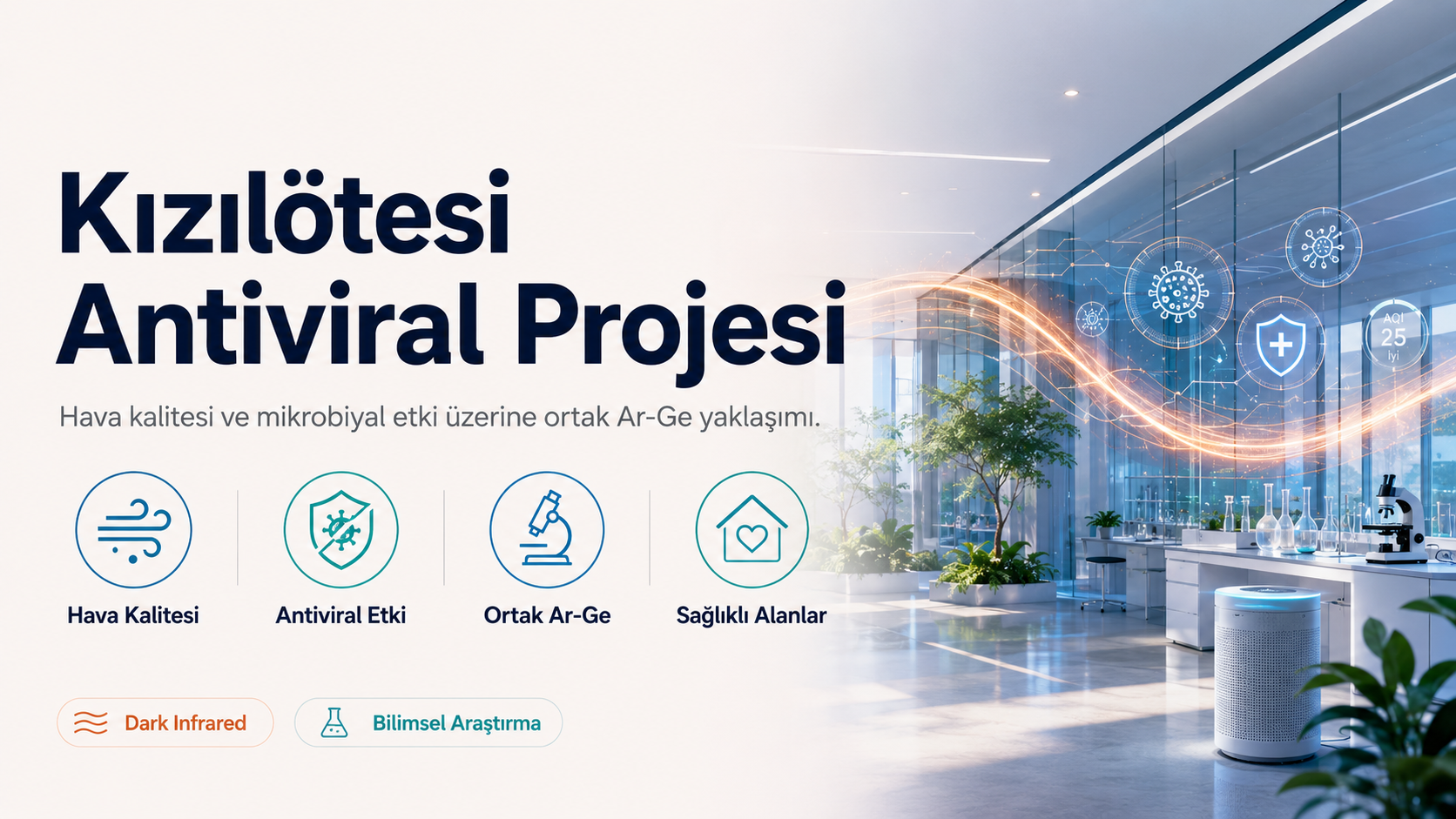
The Infrared Antiviral Project, launched in March 2020 and jointly conducted by TÜBİTAK UME and Cerrahpaşa Faculty of Medicine, investigates the effects of far-infrared (Dark Infrared) rays on microorganisms such as bacteria, viruses and fungal spores.
Initial findings from this research suggest that the effect of far-infrared rays on killing bacteria and viruses is promising.
Conventional heating systems rely on convection, or heat transfer through air, which may increase transmission risk under pandemic conditions. Kuas far-infrared heat panels (ISP Series), by contrast, operate through radiation: they heat while leaving the air still and also help airborne microorganisms and droplets on surfaces dry more quickly.
In this context, Kuas Teknoloji is collaborating on the project with more than 12 years of experience in Dark Infrared.
(Measurements conducted by TÜBİTAK and the Cerrahpaşa Faculty of Medicine are ongoing. You can follow updates here.)
Project Partners
- Cerrahpaşa Faculty of Medicine – Assoc. Prof. Dr. Ahmet Baş
- TÜBİTAK UME – Dr. Baki Karaböce, Dr. Erkan Danacı, Assoc. Prof. Dr. Hüseyin Sözeri